From the U.S. Department of Defense
Contract pages
Only pages with Egypt in the Period Jan 2012 - August 21 2013
The last contract is of August 12, 2013
Recent information to the Dutch Parliament: Letter of
October 8, 2012, and
of March 5, 2013. Both on technology for Egypts
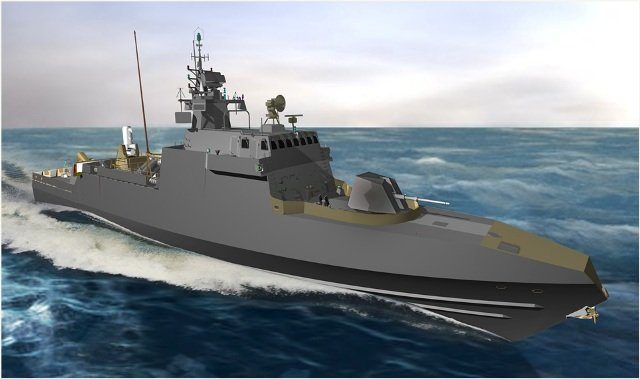
Navy Fast Missile Craft as part of Foreign Military Sales program. (For a list of major US sales to Egypt see
link.)
The FMC vessel is equipped with Thales Naval Nederland Scout (I/J band) radar, MRR-3D ES radar for surface and air surveillance and I and K dual-band fire control radar from DRS Radar Systems. It is also fitted with a Thales Naval Nederlands Link ASN 150, LinkYE, Link 14, and Link 11 datalinks, identification, friend or foe (IFF) identification systems.
You can use the list below e.g. for searching collaboration between your country, the US and Egypt.
For the Netherlands I found e.g. 3 projects on naval weapons (Harpoon SSM (2) and technology for Ejection Seats)
2012
January 5
General Dynamics Land Systems, Sterling Heights, Mich., was awarded an $11,134,389 cost-plus-fixed-fee contract. The award will provide for the modification of an existing contract to procure manufacturing and technical assistance to Egypt. Work will be performed in Cairo, Egypt, with an estimated completion date of Dec. 31, 2012. One bid was solicited, with one bid received. The U.S. Army Contracting Command, Warren, Mich., is the contracting activity (W56HZV-09-C-0488).
March 15
DynaCorp International, L.L.C., Falls Church, Va., is being awarded a $99,879,424 firm-fixed-price, cost-reimbursable contract for the Egyptian Personnel Support Services Program. This program will provide support services for Department of Defense employees, contractor personnel, and dependents stationed in Egypt permanently or on temporary duty status. These personnel support various Foreign Military Sales programs on behalf of the Egyptian military. This source selection will be the fourth contract to provide support services in Egypt contracted by the Air Force Security Assistance Center. The location of the performance is Falls Church, Va. Work is expected to be completed May 31, 2017. AFSAC/PK, Wright Patterson Air Force Base, Ohio, is the contracting activity (FA8630-12-C-5002).
May 10
Morganti HAC, J.V., Danbury, Conn., was awarded a $54,696,965 firm-fixed-price contract. The award will provide for the construction of facilities and infrastructure to support the procurement of Apache AH-64D helicopters. Work will be performed in Kattamia Air Base, Egypt, with an estimated completion date of Nov. 22, 2012. There were 23 bids solicited, with six bids received. The U.S. Army Corps of Engineers, Winchester, Va., is the contracting activity (W912ER-12-C-0022).
May 21
The Boeing Co., St. Louis, Mo., is being awarded an $11,084,479 firm-fixed-price contract for the procurement of the Harpoon and Standoff Land Attack Missile-Expanded Response weapons system components. This contract combines purchases in support of the U.S. Navy ($4,342,034; 39.2 percent) and, under the Foreign Military Sales Program, the governments of: Australia ($2,877,199; 26 percent); Turkey ($1,126,694; 10.2 percent); Japan ($916,182; 8.3 percent); Korea ($537,786; 4.9 percent); Saudi Arabia ($313,751; 2.8 percent); Pakistan ($246,452; 2.2 percent); Canada ($241,015; 2.1 percent); United Kingdom ($237,005; 2.1 percent); Kuwait ($79,668; 0.7 percent); United Arab Emirates ($67,431; 0.6 percent); India ($59,428; 0.5 percent); and Egypt ($39,834; 0.4 percent). Work will be performed in St. Louis, Mo., and is expected to be completed in August 2013. Contract funds will not expire at the end of the current fiscal year. This contract was not competitively procured pursuant to FAR 6.302-1. The Naval Air Systems Command, Patuxent River, Md., is the contracting activity (N00019-12-C-0058).
August 14
AICI/ARCHIRODON, J.V., Arlington, Va., was awarded a $66,588,000 firm-fixed-price contract. The award will provide for the design and construction of facility upgrades to support the procurement of F-16 fighter aircraft for the Egyptian Air Force. Work will be performed in Egypt, with an estimated completion date of Aug. 8, 2014. There were 23 bids solicited, with three bids received. U.S. Army Corps of Engineers, Winchester, Va., is the contracting activity (W912ER-12-C-0033).
24 augustus
AICI/ARCHIRODON - Joint Venture, Arlington, Va., was awarded a $66,588,000 firm-fixed-price contract. The award will provide for the design, construction, security and training services at Cairo West Air Base in support of the Egyptian Air Force. Work will be performed in Egypt, with an estimated completion date of Aug. 8, 2014. There were 23 bids solicited, with three bids received. The U.S. Army Corps of Engineers, Winchester, Va., is the contracting activity (W912ER-12-C-0033).
September 11
Stanley Consultants, Inc., Muscatine, Iowa, is being awarded a maximum amount $9,000,000 firm-fixed-price, indefinite-delivery/indefinite-quantity architect-engineering contract for the preparation of Navy and Marine Corps Facilities Planning and Environmental Documentation in the Naval Facilities Engineering Command (NAVFAC) Europe Africa Southwest Asia (EURAFSWA) area of responsibility (AOR). The work to be performed provides for plans, studies, events, project planning documents, geo-spatial information and service, global positioning system services and National Environmental Policy Act planning, multi-discipline architectural, mechanical/electrical, civil/structural, and fire protection projects for activities located in Southwest Asia and Africa inclusive of Bahrain, Egypt, Djibouti and United Arab Emirates. No task orders are being issued at this time. Work will be performed at various Navy and Marine Corps facilities and other government facilities within the NAVFAC EURAFSWA AOR including, but not limited to Africa (50 percent) and Southwest Asia (50 percent). The term of the contract is not to exceed 36 months with an expected completion date of September 2015. Contract funds will not expire at the end of the current fiscal year. This contract was competitively procured via the Navy Electronic Commerce Online website, with 17 proposals received. The Naval Facilities Engineering Command, Europe Africa Southwest Asia, Naples, Italy, is the contracting activity (N33191-12-D-0619).
September 20
Exelis Inc., Van Nuys, Calif., is being awarded a $24,678,610 firm-fixed-price, cost-plus-fixed-fee contract for the procurement of six radio frequency repeater systems for the government of Egypt’s SPS-48E land-based radar program and associated support for Egypt (100 percent) under the Foreign Military Sales Program. The requirement includes all associated support. This contract includes options which, if exercised, would bring the cumulative value of this contract to $25,000,000. Work will be performed in Egypt (50 percent), and Van Nuys, Calif. (50 percent), and is expected to be completed by Sept. 19, 2017. The contract funds will not expire by the end of the current fiscal year. This contract was not competitively procured, due to sole-source direction by International Agreement. Marine Corps Systems Command, Quantico, Va., is the contracting activity (M67854-12-C-2443).
October 05
Chrysler Group International L.L.C., Auburn Hills, Mich., was awarded a $10,455,090 firm-fixed-price contract. The award will provide for the modification of an existing contract to procure Wrangler TJL Jeep kits, diesel engines, transmissions, cases and spares in support of Foreign Military Sales. Work will be performed in Egypt, with an estimated completion date of Sept. 28, 2013. The bid was solicited through the Internet, with one bid received. The U.S. Army Contracting Command, Warren, Mich., is the contracting activity (W56HZV-11-C-0123).
November 5
The Boeing Co., St. Louis, Mo., is being awarded a $36,629,496 modification to a previously awarded firm-fixed-price contract (N00019-12-C-0103) for the procurement of Harpoon Weapons System components. Work will be performed in St. Louis, Mo., and is expected to be completed in April 2014. Contract funds will not expire at the end of the current fiscal year. This contract combines purchases for the governments of Australia ($32,044,428; 87.48 percent); Japan ($1,464,478; 4.00 percent); Saudia Arabia ($786,992; 2.15 percent); Korea ($953,400; 2.60 percent); the Netherlands ($848,925; 2.32 percent); Egypt ($311,045; 0.85 percent); Taiwan ($87,710; 0.24 percent); Oman ($73,128; 0.20 percent) and the United Arab Emirates ($59,390; 0.16 percent) under the Foreign Military Sales Program. The Naval Air Systems Command, Patuxent River, Md., is the contracting activity.
November 16
Daimler Trucks of North America L.L.C., Portland, Ore., was awarded an $8,589,566 firm-fixed-price contract. The award will provide for the procurement of trucks and trailers in support of Foreign Military Sales. Work will be performed in Egypt, with an estimated completion date of Nov. 5, 2013. One bid was solicited, with one bid received. The U.S. Army Corps of Engineers, Winchester, Va., is the contracting activity (W912ER-13-C-0001).
November 28
The Boeing Co., St. Louis, Mo., is being awarded a $7,595,267 firm-fixed-price delivery order against a previously issued Basic Ordering Agreement (N00019-11-G-0001) to provide additional integrated logistics and engineering services support for the Harpoon and Standoff Land Attack Missile Expanded Response, Missile System and Harpoon Launch Systems for the U.S. Navy and the governments of various foreign military sales customers. Work will be performed in St. Charles, Mo. (91.17 percent); St. Louis, Mo. (5.43 percent); Yorktown, Va. (2.64 percent); Point Mugu, Calif. (0.71 percent); and Oklahoma City, Okla. (0.05 percent); and is expected to be completed in November 2013. Contract funds in the amount of $7,595,267 will be obligated at the time of award, $2,765,989 of which will expire at the end of the current fiscal year. This order combines purchases for the U.S. Navy ($2,765,989; 36.41 percent) and the governments of Korea ($675,707; 8.90 percent); Taiwan ($641,647; 8.45 percent); Turkey ($565,969; 7.45 percent); Egypt ($375,905; 4.95 percent); Japan ($374,159; 4.93 percent); United Kingdom ($284,144; 3.74 percent); Pakistan ($251,725; 3.31 percent); Australia ($230,380; 3.03 percent); Chile ($208,507; 2.75 percent); Saudi Arabia ($199,017; 2.62 percent); Canada ($181,946; 2.4 percent); Israel ($146,506; 1.93 percent); Bahrain ($96,780; 1.27 percent); United Arab Emirates ($93,250; 1.23 percent); Germany ($81,773; 1.08 percent); Netherlands ($73,869; 0.97 percent); Kuwait ($68,289; 0.90 percent); Singapore ($64,002; 0.84 percent); Oman ($62,829; 0.83 percent); Portugal ($54,907; 0.72 percent); Thailand ($37,717; 0.50 percent); Denmark ($35,946; 0.47 percent); and Malaysia ($24,304; 0.32 percent) under the Foreign Military Sales Program. The Naval Air Systems Command, Patuxent River Md., is the contracting activity.
December 3
General Dynamics Land Systems, Sterling Heights, Mich., was awarded a $37,601,061 cost-plus-fixed-fee contract. The award will provide for the modification of an existing contract to procure services in support of the M1A1 coproduction effort at the Egyptian Tank Plant in Cairo, Egypt. Work will be performed in Sterling Heights and Cairo, with an estimated completion date of Feb. 28, 2015. One bid was solicited, with one bid received. The U.S. Army Contracting Command, Warren, Mich., is the contracting activity (W56HZV-09-C-0488).
December 6
Lockheed Martin Aeronautics Co., Fort Worth, Texas, (FA8604-13-D-7951) is being awarded a $29,446,000 requirements contract for Engineering and Technical services for the F-16 and F-22 aircraft. The location of the performance is Bahrain, Chile, Egypt, Jordan, Morocco, Oman, Pakistan, Poland, Taiwan and Turkey. Work is expected to be completed by Dec. 31, 2014. The contracting activity is AFLCMC/PZIEB, Wright-Patterson Air Force Base, Ohio. Contract involves Foreign Military Sales.
December 11
Lockheed Martin Corp., Orlando, Fla., was awarded a $23,426,616 firm-fixed-price contract. The award will provide for the procurement of the Deployable-Advanced Gunnery Training Systems in support of Foreign Military Sales. Work will be performed in Orlando and Egypt, with an estimated completion date of March 31, 2016. One bid was solicited, with one bid received. The U.S. Army Program Executive Office Simulation, Training and Instrumentation, Orlando, Fla., is the contracting activity (W900KK-13-C-0002).
December 20
The Boeing Co., Mesa, Ariz., was awarded a $56,370,522 firm-fixed-price contract. The award will provide for the procurement of AH-64D Apache Longbow Helicopters for the Egyptian Air Force. Work will be performed in Mesa, with an estimated completion date of June 30, 2014. The bid was solicited through the Internet, with one bid received. The U.S. Army Contracting Command, Redstone Arsenal, Ala., is the contracting activity (W58RGZ-10-C-0086).
AICI--ARCHIRODON JV, Arlington, Va., was awarded a $9,648,000 firm-fixed-price contract. The award will provide for the Synchrolift Safety Repair services in support of Foreign Military Sales. Work will be performed in Egypt, with an estimated completion date of Aug. 21, 2014. The bid was solicited through the Internet, with two bids received. The U.S. Army Corps of Engineers, Winchester, Va., is the contracting activity (W912ER-13-C-0005).
The Boeing Co., St. Louis, Mo., is being awarded a $12,239,714 firm-fixed-price contract to procure four each Harpoon Shipboard Command Launch Control Sets (HSCLCS), Type 148 Class Ship, AN/SWG-1A(V), Classified Portion and associated hardware; four each HSCLCS, Type 148 Class Ship, AN/SWG-1A(V), Unclassified Portion and associated hardware; eight Global Positioning System Receiver Assembly (GPSRA) Retrofit Kits and associated hardware; one Installation and Checkout Prime Spares Kit, Classified Portion; one Installation and Checkout Prime Spares Kit, Unclassified Portion; four Ninety Day Primes Spares Kit; one Two Years Classified Prime Spares Kit; two -Two Year Unclassified Prime Spares Kit; one Harpoon Shipboard Equipment Integrated Logistics Support Program; four Ordinance Alteration EGE 3987 kits; and one lot engineering technical assistance for the Government of Egypt. Additionally, this effort procures one Lot HSCLCS Hardware; one Ninety Day Prime Spares Kit; one GPSRA and associated hardware; and one Lot Engineering Technical Assistance for the Government of Turkey. Contract funds in the amount of $12,239,714 will be obligated at time of award, and will not expire at the end of the current fiscal year. Work will be performed in Lititz, Pa. (51 percent); St. Louis, Mo. (32 percent); Pryor Creek, Okla. (5 percent); Santa Fe Springs, Calif. (5 percent); Madison, Ala. (3 percent); Kirkwood, Mo. (3 percent); and Irving, Texas (1 percent), and is expected to be completed in July 2014. This contract combines purchases for the Governments of Egypt ($11,927,232; 98 percent) and Turkey ($312,482; 2 percent) under the Foreign Military Sales Program. This contract was not competitively procured pursuant to 10 U.S.C. 2304(c) (1). The Naval Air Systems Command, Patuxent River, Md., is the contracting activity (N00019-13-C-0019).
2013
February 27
AM General, South Bend, Ind., was awarded a $7,023,165 firm-fixed-price contract. The award will provide for the procurement of detuned engines for High-Mobility Multipurpose Wheeled Vehicles. This contract is in support of Foreign Military Sales for Egypt. Work will be performed in South Bend, with an estimated completion date of July 8, 2013. One bid was solicited, with one bid received. The U.S. Army Contracting Command, Warren, Mich., is the contracting activity (W56HZV-13-C-0079).
April 12
L-3 Communication, San Diego, Calif., was awarded a $10,505,889 firm-fixed-price, FMS contract to procure HF transceivers and components for RT-1606 systems and accessories. This FMS contract is in support of Egypt. Fiscal 2013 procurement contract funds are being obligated on this award. One bid was solicited, with one bid received. The Army Contracting Command, Aberdeen Proving Ground, Md., is the contracting activity (W15P7T-13-C-D518).
May 24
Lockheed Martin Maritime Systems & Sensors, Morristown N.J., is being awarded a $49,481,279 indefinite-delivery/indefinite-quantity contract for engineering, technical services and materials required for the resolution of obsolescence, reliability/maintainability issues, production/rework, testing, evaluation, installation and life cycle support functions for the Mk 92 Fire Control System. This contract will support foreign military sales (FMS) to Taiwan (40 percent), Egypt (24 percent), Poland (16 percent), Saudi Arabia (4 percent), Australia (0.4 percent), Turkey (0.2 percent), Spain (0.1 percent), Pakistan (0.1 percent) and Bahrain (0.1 percent). Work will be performed in Huntsville, Ala. (70 percent), and Moorestown, N.J. (30 percent), and is expected to be completed by May 2016. FMS funds, Fiscal 2014 and 2015 Other Procurement, Navy and fiscal 2014 and 2015 Operations and Maintenance, Navy funding in the amount of $100,000 will be obligated at time of award. Contract funds will not expire at the end of the current fiscal year. This contract was not competitively procured in accordance with 10 U.S.C. 2304(c)(1), Only one responsible source and no other supplies or services will satisfy agency requirements. Reference FAR 6.302-1. The Port Hueneme Division, Naval Surface Warfare Center, Port Hueneme, Calif., is the contracting activity (N63394-13-D-1301).
May 28
Universal Propulsion Co., Fairfield, Calif., is being awarded a $6,674,272 firm-fixed-price contract to manufacture 286 each digital recovery sequencer kits, 452 each power modules and 36 each electronic modules as kit sub-component replacement spares in support of F-15, F-16, F-117 and B-1 aircraft for the Cartridge Actuated Device/Propellant Device Joint Program Office, Naval Surface Warfare Center, Indian Head Division. Work will be performed in Fairfield Calif., and work is expected to be completed by Nov. 14, 2014. Fiscal 2012 Procurement of Ammunition, Navy, Marine Corps, Air Force, and Fiscal 2010 Foreign Military Sales funds in the amount of $6,674,272 will be obligated at time of the award. Contract funds will not expire before the end of the current fiscal year. This contract combines purchases for the U.S. Navy (39.753 percent) and the governments of Turkey (12.802 percent); Pakistan (9.986 percent); Korea (6.401 percent); Saudi Arabia (5.488 percent); Columbia (5.121 percent); Poland (5.121 percent); Greece (4.913 percent); Indonesia (3.072 percent); Bahrain (1.536 percent); Jordan (1.536 percent); Netherlands (1.366 percent); Portugal (1.024 percent); Taiwan (0.857 percent); Egypt (0.768 percent); and Denmark (0.256 percent) under the Foreign Military Sales Program. This contract was not competitively procured in accordance with 10 U.S.C. 2304(c)(1). The Naval Supply Systems Command Weapon Systems Support, Mechanicsburg, Pa., is the contracting activity (N00104-13-C-K074).
August 1
Camber Corp., Huntsville Ala. (N00244-13-D-0015); Deloitte Consulting LLP Alexandria Va. (N00244-13-D-0016); General Dynamics Information Technology, Inc., Needham Mass. (N00244-13-D-0017); Mission Essential Personnel, LLC, Columbus, Ohio (N00244-13-D-0018); and Vose Technical Systems General, Tacoma, Wash. (N00244-13-D-0019), are each being awarded an indefinite-delivery/indefinite-quantity, multiple award contract with fixed-priced provisions to technical/professional support, and related tailored administrative services for the Center for Civil Military Relations,Camber Corp., is being awarded $32,989,009, and if all options are exercised, the total aggregate value will be $99,685,514. Deloitte Consulting LLP is being awarded $10,016,317, and if all options are exercised, the total aggregate value will be $30,769,810. General Dynamics Information Technology, Inc., is being awarded $30,752,682, and if all options are exercised, the total aggregate value will be $94,045,583. Mission Essential Personnel, LLC is being awarded $4,921,667, and if all options are exercised, the total aggregate value will be $14,975,766. Vose Technical Systems General LLC is being awarded $5,460,771, and if all options are exercised, the total aggregate value will be $16,498,593. All six contracts will have the opportunity to bid on the individual task orders. Funding for these contracts will be provided on individual task orders. Work will be performed in various locations outside the continental United States (80 percent); Army Active, Reserve and National Guard posts in the United States (10 percent); Monterey, Calif. (8 percent); Kailua, Hawaii (1 percent); and Tampa, Fla. (1 percent). Work is expected to be completed by July 31, 2014. If all options are exercised, work will continue through July 30, 2016. Fiscal 2013 Operations and Maintenance and Navy funds in the amount of $5,000 for the ordering minimum will be obligated at the time of award and will be equally divided among all contractors. Contract funds will expire at the end of the current fiscal year. This announcement also identifies potential Foreign Military Sale efforts for training of foreign troops or education of officials. Potential countries where performance may occur are Egypt, Indonesia, Singapore, and Saudi Arabia, and combined would equate to less than two percent of the total effort. The contracts were competitively procured via the Navy Electronic Commerce Online and the Federal Business Opportunities websites, with seven offers received in response to these solicitations. NAVSUP, Fleet Logistics Center, San Diego, Calif., is the contracting activity.
August 12
General Electric Co., Cincinnati, Ohio, has been awarded a $13,661,657 firm-fixed-price contract (FA8122-09-G-0001-0032) for 18 Egyptian Air Force F110 Service Life Extension kits. Work will be performed at Cincinnati, Ohio, and is expected to be completed by Oct. 31, 2013. Foreign Military Sales funds to Egypt (100 percent) in the amount of $13,661,657 are being obligated at time of award, none of which will expire at the end of the current fiscal year. Air Force Sustainment Center/PZAAB, Tinker Air Force Base, Okla., is the contracting activity.